
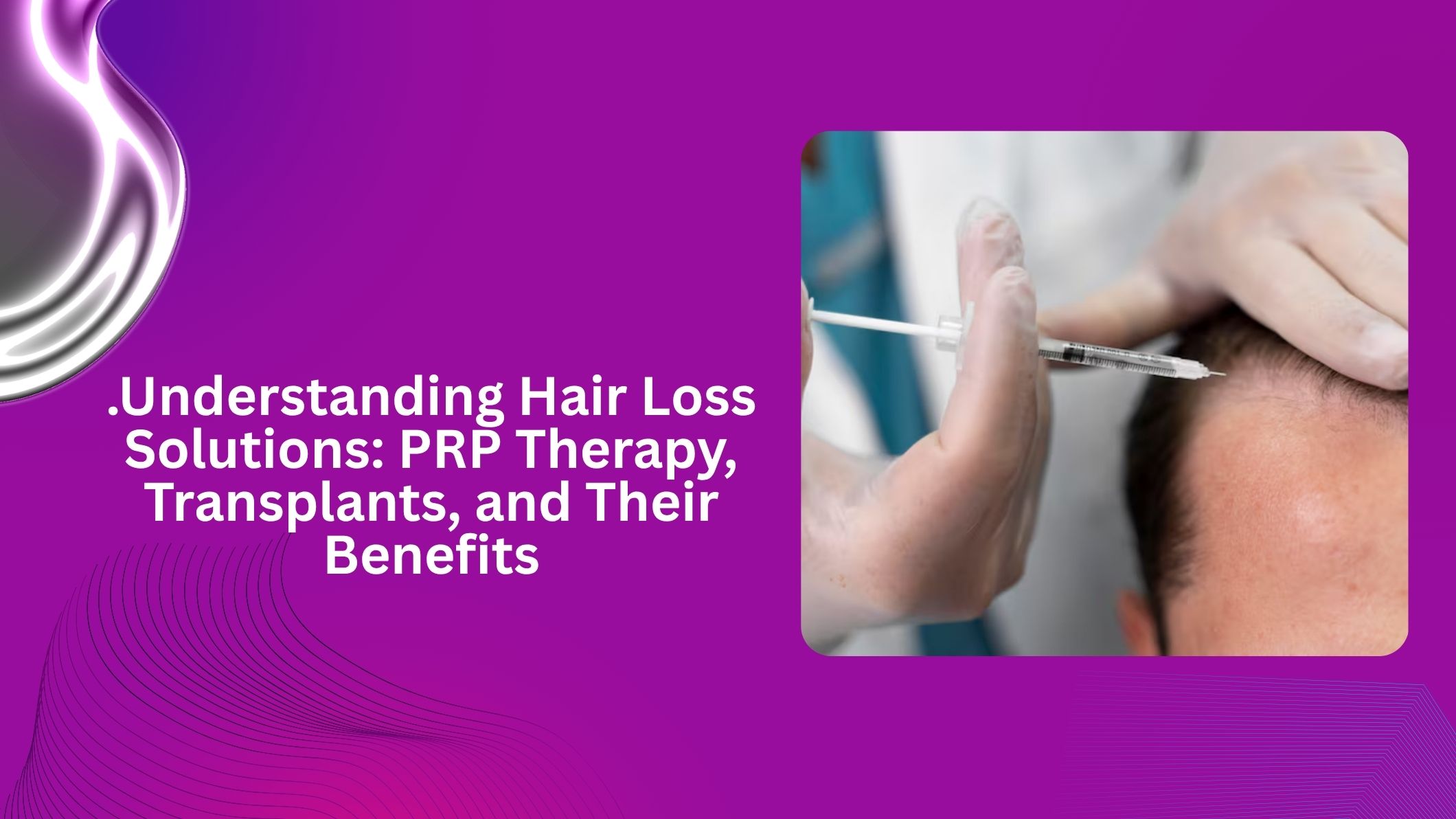
Understanding Hair Loss Solutions: PRP Therapy, Transplants, and Their Benefits
Hair loss is a common concern affecting both men and women. Factors such as genetics, hormonal changes, nutritional deficiencies, stress, medical conditions, and ageing can contribute to hair thinning and excessive shedding. While occasional hair fall is normal, persistent hair loss may affect scalp coverage, confidence, and overall appearance. Fortunately, modern hair restoration treatments offer several options to manage hair loss and improve hair density.
Platelet-Rich Plasma (PRP) therapy and hair transplantation are two popular approaches to hair restoration. Although both treatments aim to improve hair growth or coverage, they work differently and are suitable for different conditions. Understanding their benefits, limitations, and differences can help individuals make informed decisions about their hair health.
What Is PRP Hair Therapy and How Does It Work?
Platelet-Rich Plasma (PRP) therapy is a non-surgical treatment that uses a concentrated portion of a person’s own blood to support hair restoration. During the procedure, a small blood sample is collected and processed in a centrifuge to separate the platelet-rich plasma. This plasma contains growth factors that may support cellular activity and hair follicle function.
The prepared plasma is then injected into selected areas of the scalp by a qualified healthcare professional. PRP therapy is commonly considered for individuals experiencing early-stage hair thinning or certain forms of pattern hair loss. It may help improve hair density and reduce shedding in some patients, although results vary depending on the underlying cause of hair loss.
One of the main advantages of PRP therapy is that it does not involve surgery or the removal of hair follicles from another area of the scalp. The procedure generally requires minimal downtime, allowing many individuals to return to their regular activities relatively quickly.
However, PRP is not a permanent cure for hair loss and cannot reliably restore hair in completely bald areas where functional follicles are absent. Multiple sessions may be recommended, followed by maintenance treatments depending on the individual’s response. A medical assessment is important to determine whether PRP is appropriate and whether other treatments may provide additional benefits.
Hair Transplantation: A Long-Term Hair Restoration Option
Hair transplantation is a surgical procedure that involves moving hair follicles from a donor area, usually the back or sides of the scalp, to areas affected by hair loss. It is commonly used for androgenetic alopecia, also known as pattern hair loss, when sufficient healthy donor hair is available.
Two commonly used techniques are Follicular Unit Transplantation (FUT) and Follicular Unit Extraction (FUE). FUT involves removing a strip of scalp from the donor area and separating it into follicular units. FUE involves extracting individual follicular units directly from the scalp. The most suitable technique depends on the patient’s hair characteristics, donor supply, treatment goals, and the surgeon’s assessment.
A major benefit of hair transplantation is that it can provide lasting hair coverage in appropriately selected patients. Transplanted follicles from suitable donor areas are generally more resistant to the hormonal effects responsible for pattern hair loss. However, the final density depends on factors such as donor hair availability, scalp characteristics, healing, and surgical planning.
Hair growth after transplantation takes time. Newly transplanted hairs may initially shed before new growth begins, and visible results generally develop over several months. Full results may take around 9 to 12 months or longer. As natural hair loss can continue in untreated areas, some patients may also need medical treatment to maintain their existing hair.
PRP Therapy vs Hair Transplant: Which Is Better?
The choice between PRP therapy and hair transplantation depends on the stage of hair loss, the underlying cause, and individual expectations. PRP may be suitable for selected individuals with early thinning who want a non-surgical option. Hair transplantation may be more appropriate for those with established bald areas and an adequate donor supply.
PRP is less invasive and generally involves shorter recovery time, but it usually requires repeated sessions and may provide modest improvements. Hair transplantation can offer more substantial coverage in suitable candidates, although it involves surgery, recovery, cost considerations, and potential complications.
In some cases, PRP may be used alongside other hair loss treatments. However, it should not automatically replace evidence-based medical options. A dermatologist or qualified hair restoration specialist can assess the scalp, investigate potential causes such as iron deficiency or thyroid disorders when indicated, and recommend an individualised treatment plan.
Conclusion
PRP therapy and hair transplantation offer different approaches to managing hair loss. PRP may support hair density in selected patients with thinning, while transplantation can restore coverage in areas affected by more advanced pattern hair loss. The best option depends on the individual’s diagnosis, hair condition, medical history, and long-term goals. Early professional evaluation can help identify the cause of hair loss and guide appropriate treatment.
Carvers provides the best treatment plans regarding hair restoration, helping individuals explore suitable options such as PRP therapy and hair transplantation according to their hair concerns and aesthetic goals.