
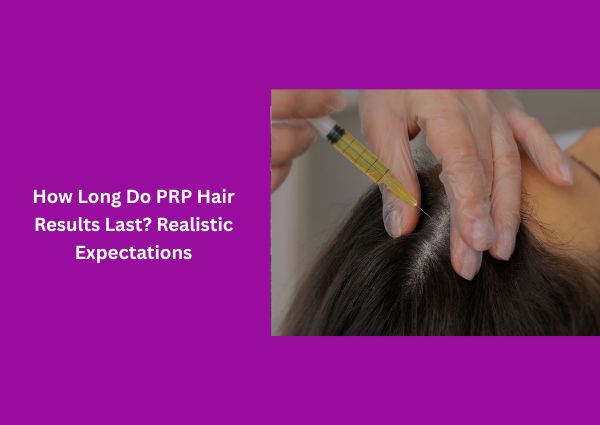
How Long Do PRP Hair Results Last? Realistic Expectations
PRP therapy has become a widely discussed option for people looking to address hair thinning and support hair restoration without surgery. Because it uses platelet-rich plasma derived from your own blood, many people are drawn to it as a natural and minimally invasive treatment approach. But one of the most common questions people ask is simple: how long do PRP hair results actually last?
The answer depends on several factors, including the cause of hair loss, the condition being treated, the individual’s response, and whether maintenance treatments are followed. While PRP can offer meaningful improvement for the right candidate, understanding realistic expectations is essential. PRP is not typically a one-time permanent fix. It is better understood as a treatment that may support ongoing hair health and often requires continuity for sustained results.
When Results Appear and How Long They May Last
PRP works by using concentrated growth factors from your own platelets to support the scalp environment and potentially stimulate hair follicles. Because hair growth follows natural biological cycles, results usually take time.
Many people do not see noticeable changes immediately. Early improvements, when they occur, may begin appearing after several months rather than weeks. Some individuals may first notice reduced shedding, followed by gradual changes in hair thickness, density, or overall hair quality over time.
Initial treatment often involves multiple sessions spaced over a period determined by the treating provider. This early phase is commonly designed to build response rather than produce instant transformation.
How long results last after improvement varies. For some people, benefits may continue for many months, while others may require maintenance sooner to help preserve results. One reason is that PRP may help support follicles, but it does not necessarily eliminate the underlying causes of ongoing hair loss, especially in progressive conditions such as pattern hair thinning.
That is why maintenance is often part of realistic expectations. Many providers recommend periodic follow-up treatments to help sustain benefits. Without maintenance, results may gradually diminish over time depending on the individual situation.
It is also important to understand that PRP outcomes can vary significantly. Some people may respond well, while others may experience more modest improvement. The degree and duration of results are not identical for everyone.
What Influences Longevity and Why Expectations Matter
Several factors can affect how long PRP hair results may last.
One major factor is the underlying cause of hair loss. PRP may be considered in certain types of thinning, but outcomes may differ depending on whether hair loss is related to genetics, stress, hormonal factors, nutritional issues, or other causes. Proper evaluation matters.
Timing may also influence outcomes. In some cases, earlier intervention when follicles are still active may offer different potential than waiting until advanced hair loss has progressed significantly.
Individual biology also plays a role. Platelet quality, scalp health, age, overall health, and natural response can all influence results and their longevity.
Maintenance is another major factor. People who follow recommended maintenance schedules may often be better positioned to support longer-lasting results than those who stop treatment entirely after the initial sessions.
Lifestyle and contributing factors matter too. Ongoing stress, poor nutrition, untreated medical issues, or other triggers affecting hair health may impact how well results are maintained.
This is why realistic expectations are so important. PRP is often best viewed as part of a broader hair restoration strategy rather than a standalone miracle solution. In some cases, providers may recommend combining PRP with other approaches depending on the individual’s needs and diagnosis.
It is also important to define success realistically. For some people, success may mean improved thickness or reduced shedding. For others, it may mean helping slow progression. Not every result looks the same.
The biggest misconception is assuming PRP delivers permanent results after a few sessions. In reality, many people benefit most when they approach PRP as an ongoing management strategy rather than a one-time cure.
When done for the right candidate with proper guidance, PRP may support hair health and produce meaningful improvement. But long-term satisfaction often comes from understanding both its potential and its limitations.
Realistic expectations do not lower the value of PRP—they help people make better decisions and pursue treatment with clarity.
Carvers provides best Treatment regarding this and offers expert-led PRP hair restoration solutions designed to deliver personalized care, realistic guidance, and advanced treatment support for long-term hair health.