How to Treat Acne Scars: Exosomes, Microneedling & Laser
Acne may disappear over time, but the scars it leaves behind can affect your confidence and skin texture for years. Fortunately, advances in aesthetic dermatology have made it possible to significantly reduce acne scars with safe and effective treatments. Among the most popular options today are exosome therapy, microneedling, and laser resurfacing. Each treatment works differently, and the right choice depends on your skin type, scar severity, and desired results.
Understanding the benefits and limitations of each option can help you make an informed decision and achieve smoother, healthier-looking skin.
Understanding Exosomes, Microneedling & Laser Treatments
Exosome Therapy
Exosome therapy is one of the latest breakthroughs in regenerative skincare. Exosomes are tiny extracellular vesicles that contain growth factors, proteins, and signaling molecules that promote skin healing and regeneration. When applied after procedures such as microneedling or laser treatment, exosomes accelerate tissue repair, reduce inflammation, and stimulate collagen production.
This treatment is especially beneficial for individuals looking to improve acne scars while minimizing downtime. Patients often notice smoother skin texture, improved elasticity, and a brighter complexion after multiple sessions. Because exosomes encourage natural skin regeneration, they are increasingly being used as an advanced solution for skin rejuvenation.
Microneedling
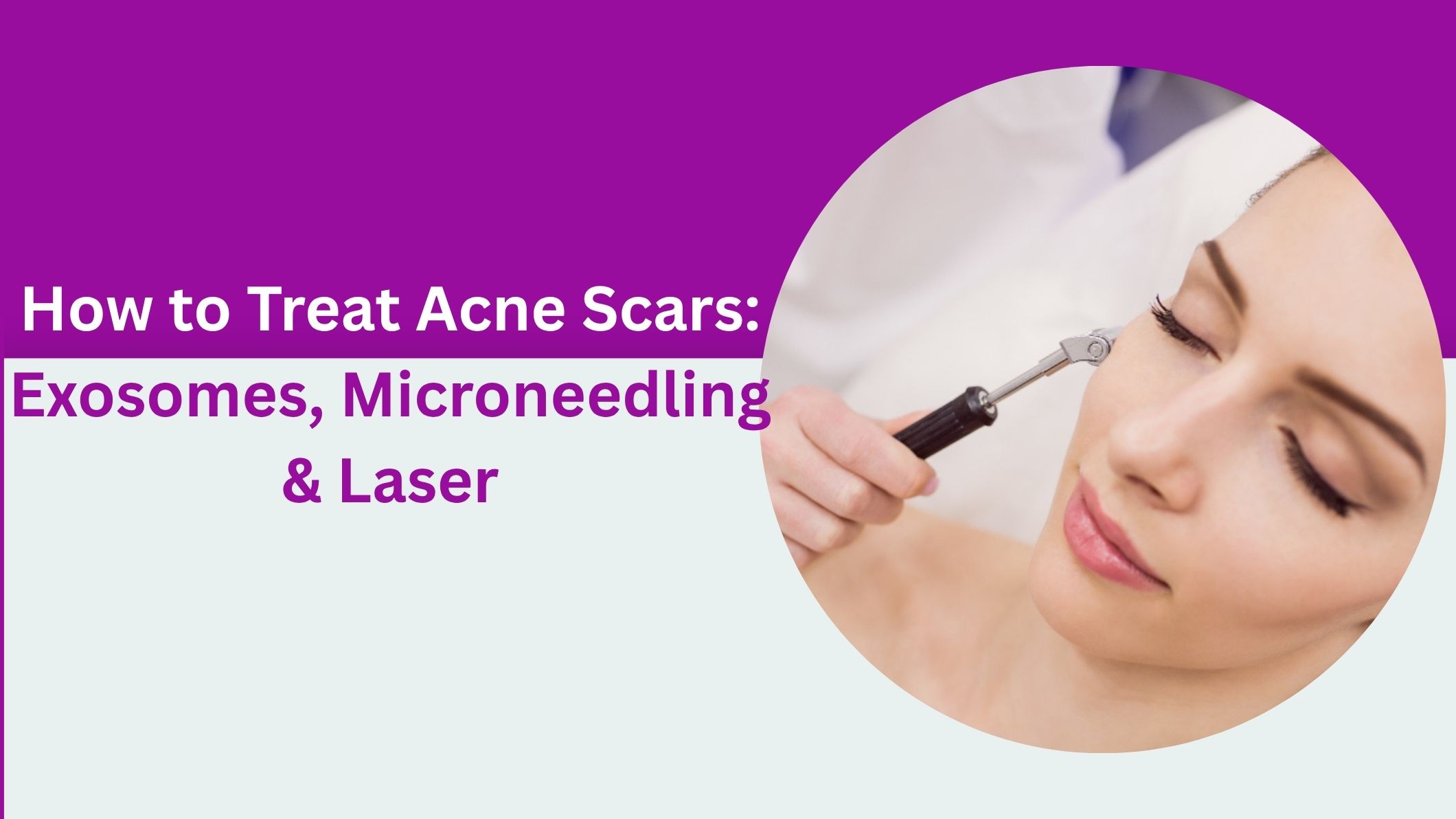
Microneedling is a minimally invasive treatment that uses fine needles to create tiny micro-injuries in the skin. These controlled injuries stimulate the body’s natural healing process and increase collagen and elastin production, helping to improve acne scars over time.
Microneedling is particularly effective for rolling and shallow boxcar scars. It also improves enlarged pores, uneven skin texture, and fine lines. The procedure typically involves minimal downtime, with mild redness lasting one to three days.
Several sessions are usually recommended for optimal results, as collagen remodeling occurs gradually over time. When combined with regenerative treatments like exosomes or platelet-rich plasma (PRP), the results may be even more noticeable.
Laser Resurfacing
Laser treatments work by removing damaged skin layers or stimulating collagen production beneath the skin’s surface. Fractional CO₂ laser and Erbium laser are among the most commonly used technologies for treating acne scars.
Laser resurfacing is highly effective for deeper acne scars, uneven skin texture, and pigmentation issues. It offers dramatic improvement but usually requires a longer recovery period compared to microneedling. Patients may experience redness, swelling, and peeling for several days after treatment.
The intensity of laser treatment can be customized according to the severity of scarring and the patient’s skin type. Experienced dermatologists carefully evaluate each case to minimize risks such as pigmentation changes, especially in darker skin tones.
Which Acne Scar Treatment Is Right for You
Choosing the best treatment depends on several factors, including the type of acne scars, skin sensitivity, budget, and desired recovery time.
If you have mild to moderate acne scars and want minimal downtime, microneedling is often an excellent starting point. It provides gradual improvement with little disruption to daily activities.
For patients seeking enhanced skin regeneration and faster healing, exosome therapy offers a modern solution that complements microneedling or laser procedures. It supports collagen production while reducing inflammation and promoting healthier skin repair.
Individuals with deep boxcar or ice-pick scars may benefit more from laser resurfacing, which delivers significant skin remodeling. Although recovery takes longer, laser treatments often produce more dramatic improvements for severe scarring.
In many cases, dermatologists recommend combining treatments. For example, microneedling followed by exosome therapy or laser resurfacing with regenerative treatments can maximize collagen production and deliver more comprehensive skin improvement.
Regardless of the treatment selected, proper skincare and sun protection are essential. Using sunscreen daily, following post-treatment instructions, and maintaining a healthy skincare routine help preserve results and prevent further skin damage.
Acne scar treatment is not a one-size-fits-all solution. A personalized consultation with a qualified dermatologist ensures that the treatment plan is tailored to your skin type, scar pattern, and aesthetic goals, providing the safest and most effective outcome.
Carvers provides the best treatment for acne scars using advanced technologies, personalized treatment plans, and expert dermatological care to help you achieve smoother, healthier, and more confident skin.